The problem
Small businesses send receipts and bank statements to their accountant by email, and neither side has one clear view of what is due, what has been checked and what has been filed. Tax software that talks to HMRC is also hard to build: each API has its own rules, fraud prevention headers are required on every call, and HMRC tests the app before it allows live use.
What we did
We built a multi-tenant Next.js platform with three sides: client, accountant and admin. Clients upload documents and connect their bank through Salt Edge open banking.
Accountants turn bank transactions into categorised line items, and VAT returns are worked out from the confirmed items. Claude vision can read uploaded documents and suggest figures.
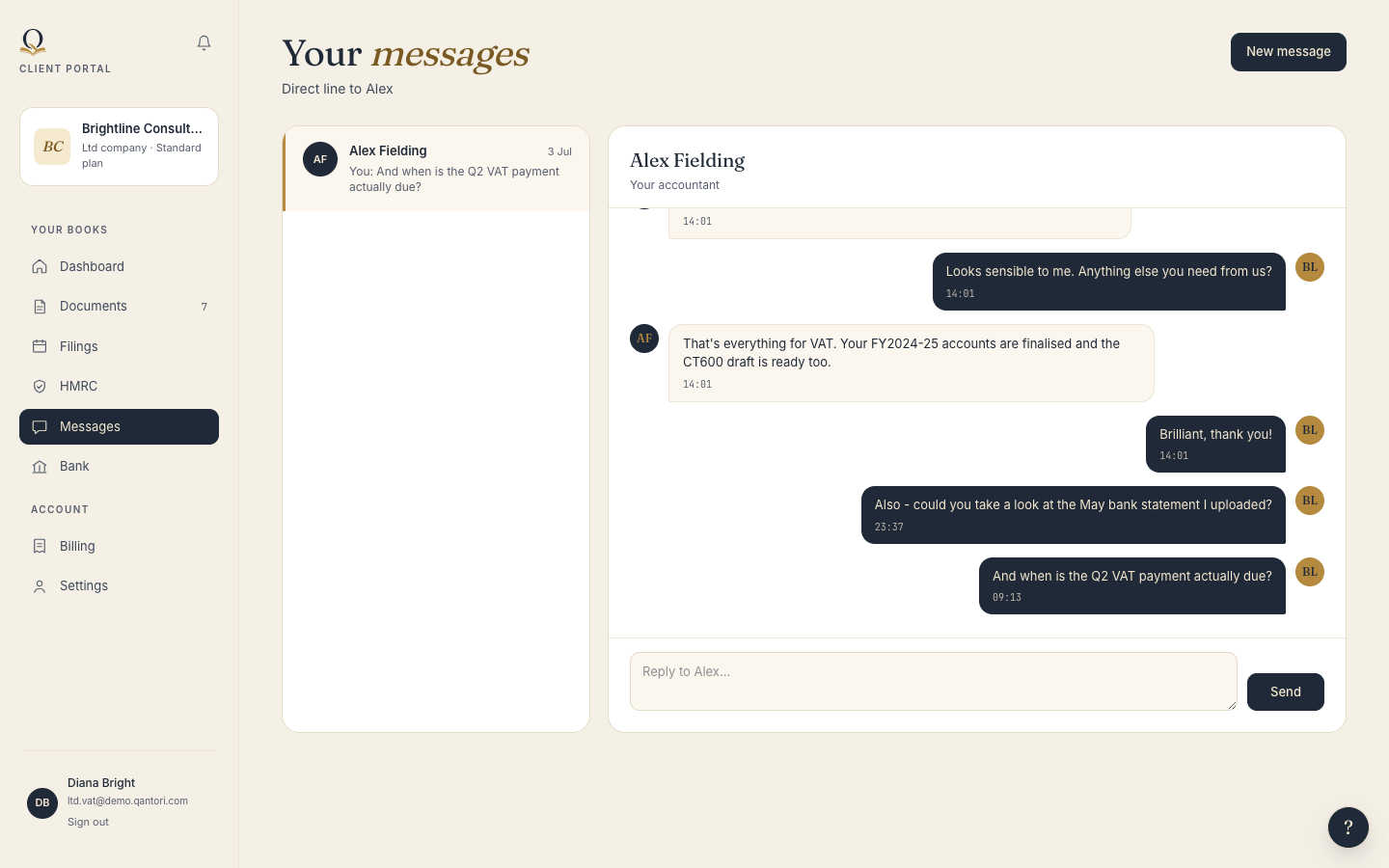
Messaging, review statuses and an obligations calendar keep both sides on the same page. On the filing side we built Making Tax Digital for VAT and for Income Tax Self Assessment (quarterly updates per business, through to the final declaration), agent authorisation including the paper 64-8 route, Corporation Tax CT600 returns sent through HMRC's Transaction Engine, and micro-entity (FRS 105) accounts as iXBRL for Companies House.
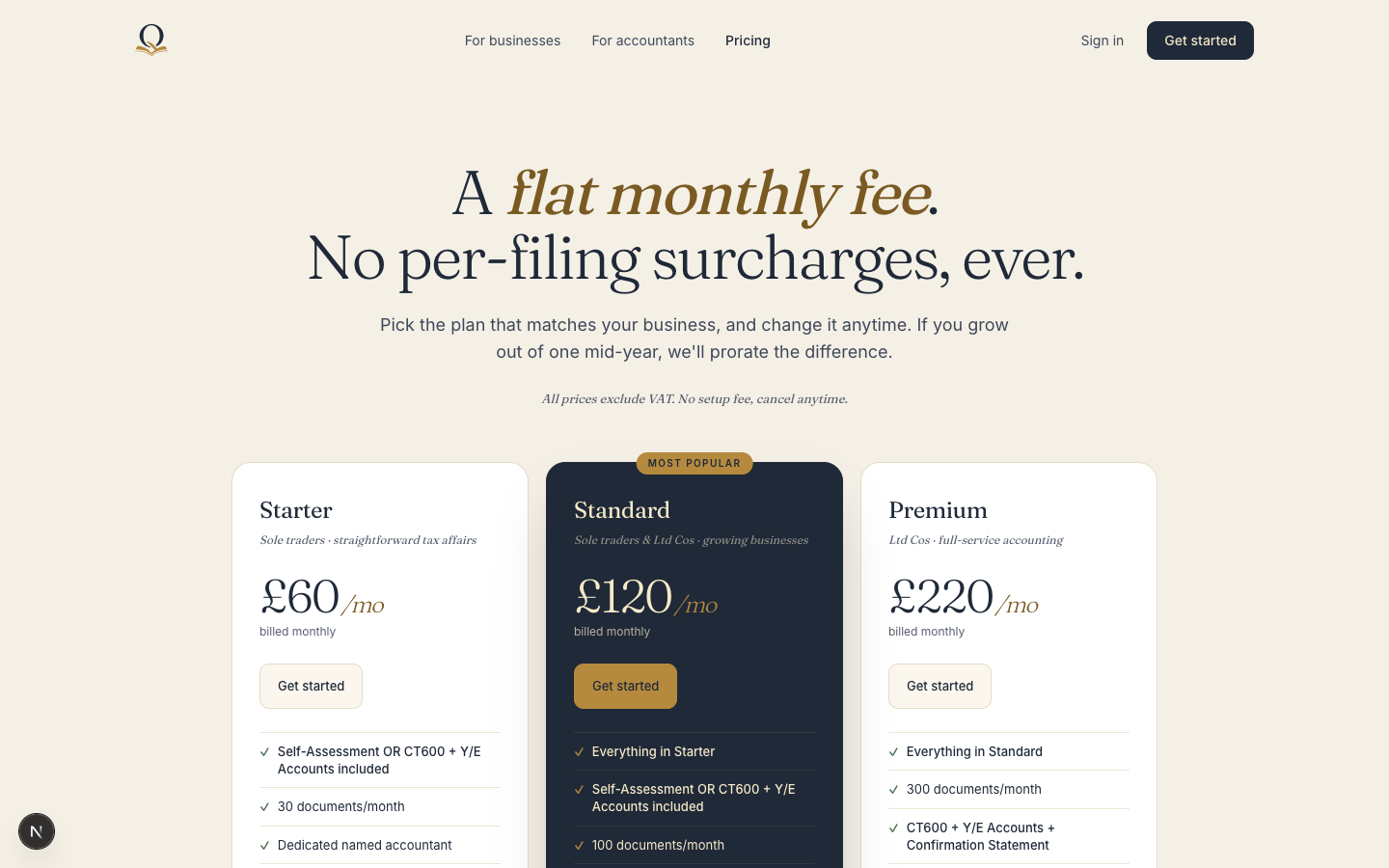
HMRC fraud prevention headers are sent and checked on every call. Billing runs on Stripe, with monthly commission paid out to accountants by Stripe transfer.
The whole interface is in English and Bulgarian.
What changed
- A CT600 Corporation Tax return accepted end to end by HMRC's test service.
- Making Tax Digital for VAT and Income Tax Self Assessment, including per-business quarterly updates and the final declaration.
- Micro-entity accounts produced as iXBRL, with the generator checked against the Arelle validator.
- Open banking via Salt Edge, with VAT returns worked out from categorised bank transactions.
- Full English and Bulgarian interface, plus a WCAG accessibility and contrast pass.